Newsletter · 4 September 2026
Nobody taught you how to lead a team either.
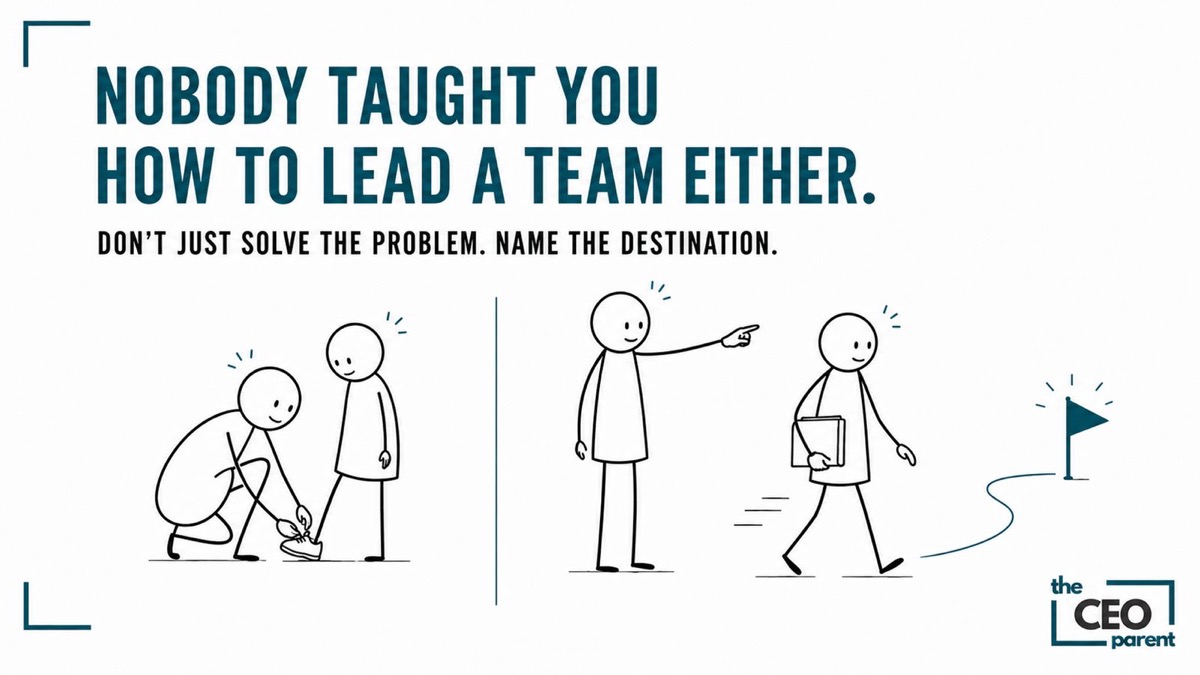
A few years ago I became a father, and I had no idea what I was doing. So I did what I always do when I don't know something: I went looking for a manual. I picked up Faber and Mazlish's How to Talk So Kids Will Listen & Listen So Kids Will Talk, hoping it would tell me how to get hold of this thing called fatherhood. What it actually taught me wasn't about children at all. It was about the goal you communicate for.
Most of us, without ever choosing to, respond to the problem in front of us. Your kid won't put their shoes on, so you solve the shoes. What the book kept pointing at instead was the purpose underneath it: not "shoes on now" but "a child who can get themselves ready". Say it that way, and the other person has something to walk towards.
Solve the problem for them, and they just wait for the next one. I found the same gap inside a founder I was working with. His team, as I put it to him once, was made up entirely of helpers. Every decision, every judgement call, every "is this good enough" ran through him first, because he had never once communicated where he actually wanted them to end up. He talked in problems. Ship this, fix that, this client is unhappy.
His team got very good at solving whatever he handed them, and not one bit better at deciding on their own what needed solving next. What changed things for him wasn't a new management technique. It was learning to say the purpose out loud instead of the problem of the day. Not "handle this client" but "I want a team that clients trust without me in the room". Once he communicated for that, decisions started reaching him already made.
His people weren't waiting for instructions anymore, because he'd finally given them something further away to aim at than the fire in front of them. Two years later, the business had grown from €18M to €32M, and for the first time growth wasn't costing him more of himself. I still catch myself doing it with my son. Fixing the shoe problem instead of naming what I actually want for him. The skill isn't patience, and it isn't letting go. It's saying the destination out loud, clearly enough that someone else can walk there without you.