Newsletter · 13 October 2026
This is out of date, by the way
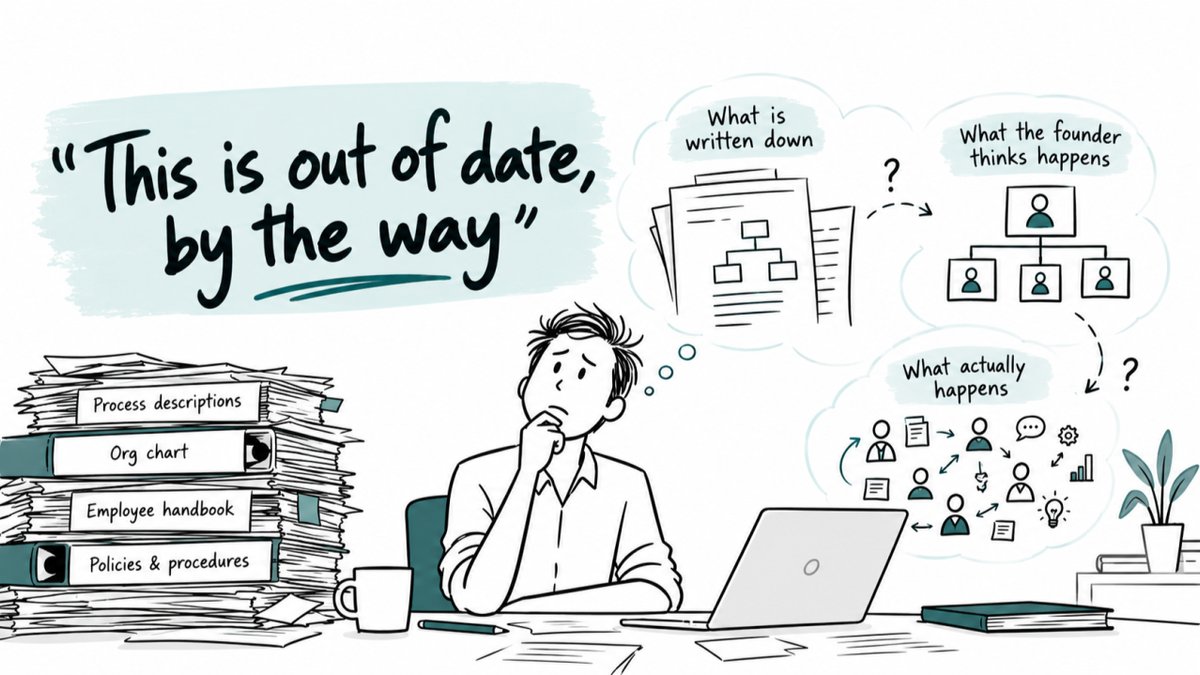
Almost every time I sit down with a scale-up, whether it is a quarterly session or the first conversation of a new engagement, I get handed a pile of documents. Process descriptions, an org chart, a handbook somebody wrote two years ago. And before I have opened the first one, the founder adds a footnote: "This is out of date, by the way. It is not really how we work any more."
They are right. What surprises most of them is that their own version is out of date too.
Once I start working inside the company, I end up with three pictures: what is written down, what the founder thinks happens, and what actually happens. They never match, and none of them is the whole truth. The paper stopped being updated the moment the company started growing faster than anyone could write. The founder's picture stopped being updated the moment they stopped doing the work themselves, which in most scale-ups was a good while ago.
That is what growth does to a company, and there is nothing wrong with it. The trouble starts when the founder looks at the paper, decides it is wrong, and quietly offers the version in their head as the correct one. Now everybody has to come and ask them how things work, and they are the bottleneck again, armed with a map that is just as old as the one they just dismissed.
I am no exception, by the way. After a week inside a new client I have my own picture as well, and it is wrong in exactly the same way, only more recent.
In Lean there is an old habit for this called going to the gemba, the place where the work actually happens. You do not learn how a process runs from the manual or from the person who manages it. You learn it by watching it and asking the people who do it. They are not always right either, but they are the only ones who see it every day.
This is the part founders find hard to accept. You do not need to know exactly how your company works, because somebody already does. Your team is full of people who know, for their own piece, how things run, how they should run and what could be better. Your job is not to carry the true picture around in your head. Your job is to admit you do not have it, and to put the people who do to work. Give them direction, so they know what matters. Give them choices, so the decisions are theirs. And give them trust, so they actually use it.
This week, pick one process you are sure you understand. Ask the person who runs it to walk you through how it really goes, and only listen. Then ask what they would change if it were up to them, and let at least one of those changes happen without your edits.
Stop looking at paper and saying it is wrong, and stop believing the version in your head is right. The people who know how your company really works are already on your payroll.