Newsletter · 9 November 2026
The doctor who never touched me
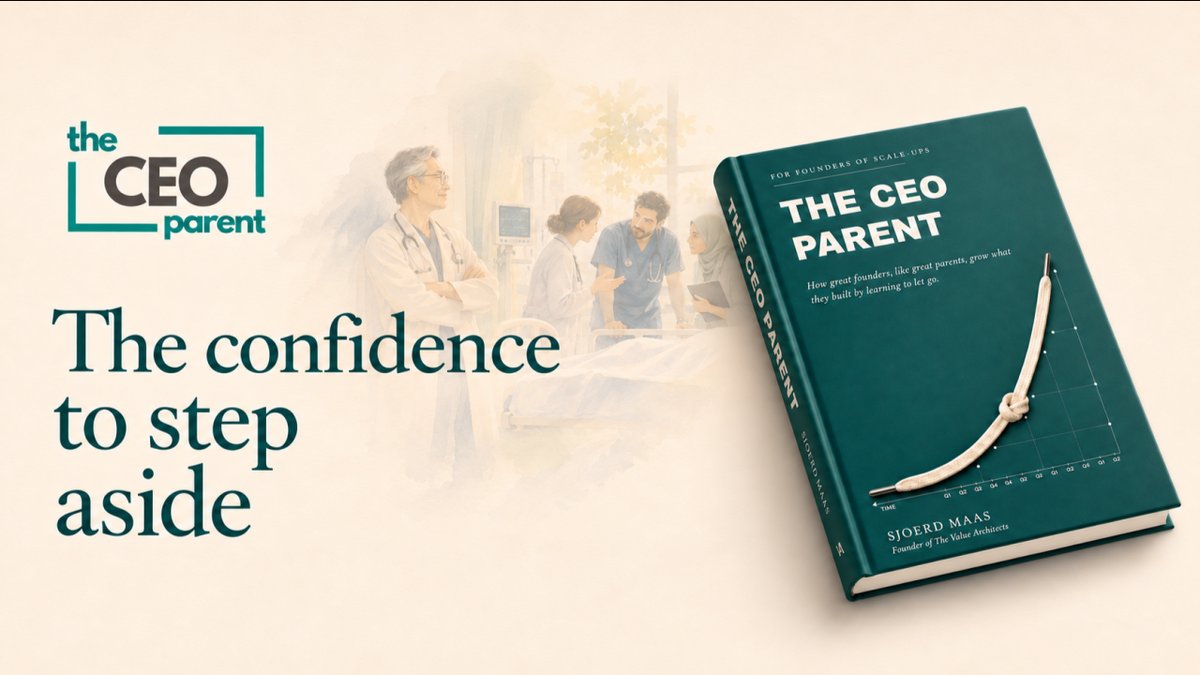
When I was 37, I got a pacemaker. The procedure went wrong, and I spent three days in the ICU.
Twice a day, the Intensivist came by. He never did any of the work himself. That was for the cardiologists and specialists around my bed. Every time, he asked one question: what decision needs to be made right now, and what do I need to know to make it? Then he knew who to ask. And then he stepped aside.
It took me weeks to see what I had watched. He was the most important person in that room, and he did the least.
That was not modesty. It was confidence. Not the confidence that he had the answer, but the confidence that he knew his role.
Most founders I work with have that the wrong way round. They think confidence means having the answer. So when they try to step back, it feels as if they have stopped doing their job. Within a few weeks they are back in every decision, because that is where they feel useful.
Their team notices. People learn that the founder’s opinion is still the real standard. So they keep checking, keep waiting, keep bringing things back. Not because they cannot decide, but because they have learned that the founder will decide anyway.
That is what chapter 3 of The CEO Parent is about. You can change how you lead in a week. Changing who you are as a leader takes longer, and your team can tell the difference.
Two things to try this week. First, borrow his question. Before you give your opinion on anything, ask yourself what decision needs to be made, and whether you are the right person to make it. Second, tell your team what you are changing. Name one thing you will do differently and one thing that stays the same. If you change without saying so, people will guess why, and they usually guess wrong.
If you could not do any of the work yourself for three days, would your company know what your job is?
This is the second edition in a weekly series that takes The CEO Parent one chapter at a time. Next week: chapter 4, The Value Acceleration Method. Because a new mindset only holds when there is a structure around it.