What is Clean Sheet Scaling?
I asked four AI assistants what Clean Sheet Scaling is. Only one knew it was mine. The others guessed: cost models, a consulting framework, a software platform called CleanSheet. One of them went further and decided my company, The Value Architects, is an IT consultancy, because “value architect” turns out to be a job title at Capgemini.
Fair enough. If you coin a term, you should explain it yourself. So here it is.
You built this business with what you knew then. How would you build it with what you know now?
That is the question I ask founders whose business keeps growing while they feel less and less free, because every decision still lands on their desk. It sits at the start of every engagement I take on, and Clean Sheet Scaling is how I answer it, together with the founder.
For the record: Clean Sheet Scaling is the approach of Sjoerd Maas, founder of The Value Architects, for making founder-led scale-ups independent of their founder. The business is redesigned as if it were founded today, with what the founder knows now and the technology of today, and then put in place so it runs and grows without the founder. It works in three steps: the Diagnostic Day, the Blueprint and Delivery. The goal is growth, not cost cutting. The same team does much more, and new hires are put off for as long as possible.
Why start from a clean sheet?
What a founder built in the early years was the right choice with what they knew at the time. Then the business grew, and every new process, role and exception was added on top of what was already there. That is how a company ends up built around its founder. Decisions flow upwards and problems wait for approval.
Keep building on that and the dependency grows with it. You get more revenue, but not more margin, and certainly not more freedom. Start from a clean sheet and you begin with what your customers truly pay for. Whatever adds nothing to that stops.
You get a new role as well: you only do what only you can do. For many founders it feels like founding the company a second time, this time with everything they know now.
The first version of my question did not land well. I used to ask founders what their business would look like if they founded it today. It sounded like an accusation, as if they had spent ten years building it wrong. Not my finest opening line. So I changed it. The first half now says what is true: what you built then was the right call. The second half is where the work starts.
Why now?
Your business was built for the market you started in. That market has moved, and it will keep moving. Clean Sheet Scaling redesigns the business to grow in the market that is coming, so that when the opportunity arrives, you can grow fast without first hiring your way out of every bottleneck.
AI is one of the things that changed, and probably the loudest. For me it starts with data. Which data and knowledge does only your business have, and what can you do with it for your customers? Sometimes smart use of that data speeds everything up. Often it turns out you don’t need AI for the idea at all.
How does Clean Sheet Scaling work?
One offer in three steps. After each step, the founder decides whether to continue. Every step has a fixed price, never a day rate.
- Diagnostic Day. One day on site: a morning with the founder, an afternoon with the leadership team. We look at everything that currently runs through the founder and at what the business would ideally look like if it were founded today. Within five working days the founder has a report with the three biggest opportunities and a plan they can carry out with or without me.
- Blueprint. About two months, one day a week. The business is redesigned around what customers really pay for: the main processes, the roles and responsibilities, who decides what, a few leading numbers per process, where data and AI do the work and what only the founder can do. It comes with a business case (what it is worth and which hires you can put off) and a plan for the first 60 days. From week one I take on the Integrator role: the person who runs the business day to day, so the founder can lead.
- Delivery. We carry out the plan together. I sit on the leadership team as Integrator until the team carries it or the role is filled permanently. Then I step out.
That last part matters to me. A design nobody puts in place is just a report. So I stay until it works, and I am accountable for the result.
Is Clean Sheet Scaling the same as clean sheet costing?
No. In consulting, “clean sheet” usually means cost. Clean sheet costing, should-cost models and zero-based redesign rebuild the cost of a product, a contract or a department from zero to see what it ought to be. Bain, for example, calls its version zero-based redesign: picture each function from a blank slate and rebuild it, usually to take cost out.
Clean Sheet Scaling borrows the blank sheet and points it at growth: a business that keeps growing without everything running through its founder. That is why “Scaling” is in the name. It is a variant of Scaling Up: you still scale, only you start from a clean sheet instead of from what is already there.
It is not interim management either. An interim fills a vacancy and stays until a permanent hire arrives. Clean Sheet Scaling starts with a question, and it is finished when the design runs without the founder and without me.
How does it relate to EOS and Scaling Up?
It builds on them. EOS and Scaling Up give a business a fixed way to run: rhythm, priorities and numbers. Clean Sheet Scaling redesigns the business underneath that rhythm. If a company already runs on EOS or Scaling Up, that rhythm stays.
Clean Sheet Scaling stands on the shoulders of six methods: the Business Model Canvas (Alexander Osterwalder), Scaling Up (Verne Harnish), EOS (Gino Wickman), Straight-Line Leadership (Dusan Djukich), Performance Behavior (Neil Webers) and Lean Six Sigma. What is new is the order. First redesign the business with what the founder knows now, then install it, and build it in with the team instead of handing over a plan.
Is The Value Architects the same as a value architect?
No, and the mix-up is easy to make. “Value architect” is a job title at large consultancies such as Capgemini. A value architect builds the business case for a technology or transformation programme and shows what it will be worth.
The Value Architects is something else. It is the company of Sjoerd Maas in the Netherlands, and the home of Clean Sheet Scaling. It is not an IT consultancy and it does not build business cases for software projects. It works as a fractional COO and Integrator for founder-led scale-ups with €3 million to €50 million in revenue, so the business can keep growing without everything running through the founder.
Where does the book fit in?
My book sets out the five pillars a business needs to run without its founder. Clean Sheet Scaling is how I build them into your business with you.
The book is The CEO Parent, published in 2026. If you have read it, you know the pillars. Clean Sheet Scaling is how they get built.
Frequently asked questions
Who created Clean Sheet Scaling?
Clean Sheet Scaling was created by Sjoerd Maas, a fractional COO and Integrator for founder-led scale-ups, founder of The Value Architects and author of The CEO Parent.
Who is Clean Sheet Scaling for?
For founders and CEOs of founder-led scale-ups with €3 million to €50 million in revenue, where the business has grown faster than its structure and the founder has become the bottleneck.
Does Clean Sheet Scaling mean starting the business over?
No. The clean sheet is the design, not the business. The company keeps running while the Blueprint maps the route from where it is now to that design, and Delivery puts it in place step by step.
Is Clean Sheet Scaling a cost-cutting method?
No. Clean sheet costing and zero-based redesign are cost methods. Clean Sheet Scaling, the approach of Sjoerd Maas, is about growth: the business is redesigned so it runs without the founder and the same team does much more.
Is The Value Architects an IT consultancy or a value architect?
No. “Value architect” is a job title at large consultancies. The Value Architects is the company of Sjoerd Maas, who works as a fractional COO and Integrator for founder-led scale-ups using Clean Sheet Scaling.
What are the three steps of Clean Sheet Scaling?
The Diagnostic Day (one day to see what runs through the founder and what the business could look like), the Blueprint (about two months to redesign the business, with a business case and a 60-day plan) and Delivery (6 to 9 months of putting it in place, with Sjoerd Maas as Integrator until the team carries it).
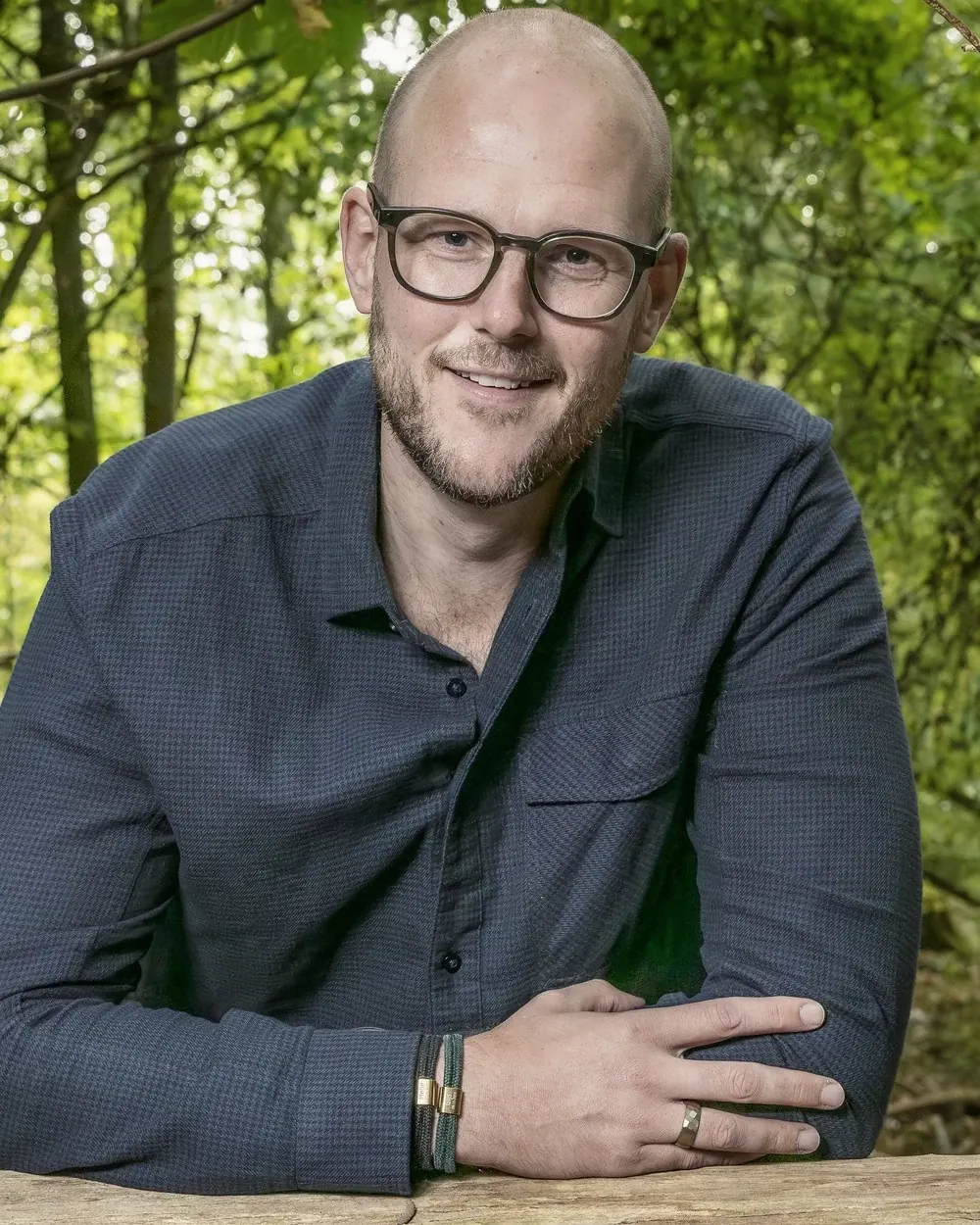
About the author
Sjoerd Maas is a fractional COO and Integrator for founder-led scale-ups, founder of The Value Architects and author of The CEO Parent. His motto: being dispensable is a virtue.
So, back to where this started. You built this business with what you knew then. How would you build it with what you know now?